Pages

Friday, May 31, 2013

The Wonder of Rain

Texas native and WWW member Chris Bradley shares a post from her Practicing Wonder blog on water, the Texas Hill Country and what incites our wonder and writing. (Don't forget to complete the writing prompts at the end of the post!) 

Mexican hat, also called prairie coneflower

If there is magic on this planet, it is contained in water. --Loren Eiseley

Here in the Texas hill country on this May Saturday morning, it’s been raining off and on for the past thirty hours or so. The forecast for the next few hours is for more thunderstorms, so I zipped outside just now during a break between showers to take the photos pictured here.

Scabiosa or pincushion flower
These pincushion blooms are beaten down by the rain but will perk up even stronger when the sun returns.

Limestone pitted by the rain holds water naturally.
A limestone step holds rain while mother-of-thyme luxuriates in the moisture.

Blackfoot daisy
A blackfoot daisy holds onto raindrops.

I had to chuckle when I read the following line from the National Weather Service forecast for our locale:  Weather conditions will improve significantly this evening into Sunday.

Really? The weather can’t get any better that what it is right now.

My birth occurred at the end of the seven year drought in this part of Texas in the 1950’s. My parents were part of a generation who came of age during the Great Depression, served the United States during World War II, and then, during the early years of their marriage, scratched out a living farming and ranching for those seven years of drought with practically no precipitation.

(If you want to read a brilliant and literary description of the difficulties of that era in Texas, read Elmer Kelton’s novel The Time It Never Rained. During the time of that drought, Kelton worked as an agricultural reporter and said he spent seven years trying every day to think of some other way to write, “Still dry.”)

So it isn’t surprising that my parents were experts in making do, building from scratch, and doing without. And they impressed those values on their children.

One of Daddy’s favorite jokes was: “You can never have too much rain or too many white-faced baby calves. We almost had too much rain one time. [Here he paused before the punchline.] There was three feet of water in the courthouse.”

We’re in a drought right now that compares in scope and severity with the extremely difficult years that so influenced my parents and their peers. Today’s rain is a only a move in the right direction, not the end of overall dire conditions, but it rejuvenates my spirits as it perks up the plants in my garden. They're tough (like my parents), selected for our often arid heat, but they love the rain. I can almost hear them singing.

It’s heartening to see water do its magic.

Writing Practice:

Complete the following: If there is magic on this planet, it _____________ .

Complete the following: My parents were of a generation who _____________.


For quite a few years, Chris Bradley taught English and creative writing to high school students in the Texas hill country. She now has time to travel, garden, ride horses, and mountain bike, but she still misses those discussions with students and continues to be thankful for all the lessons which they taught her.

Sunday, May 26, 2013

Four Brides and Their Dresses

Student of history and past-WWW President Pamela Tartaglio writes about what wedding dresses of the past reveal about the brides and their lives, as revealed by "I Do, I Do" an exhibit at the Pasadena Museum of History.

In 1890, Bertha Supnick married in a practical bridal gown, a colored dress she could wear after her wedding.  Although she wed in the wealthy winter resort of Pasadena, California, Bertha was a member of the working class and would later be employed at Pasadena Steam Laundry.  Born in Germany, she married a fellow immigrant, Andrew Hansen of Denmark. 
Historians call this a "best dress" wedding gown.
Bertha’s rust-colored bridal gown looks homemade, not polished and complex.  She may have sewn it herself, excited to get married to Andrew, of course, but also to own a dress of rich moiré taffeta with sequined trim and Juliet sleeves.  She would wear it after she became Mrs. Hansen, on special occasions such as parties and Christmas.  

Susie Markham's pleated silk chiffon gown
Susie Markham was the niece of a former California governor. Although she did not move to her home near Pasadena’s Millionaires’ Row until several years after her 1901 wedding, her dress represents those worn by fortunate brides in that town.  Susie’s gown is of pleated silk chiffon, visible near her feet, but mostly covered by net with large linen appliqué.  The net below her neck and above her wrists is dotted with faux pearls.  A detachable belt and cuffs are decorated with faux pearls in a geometric design.  There is a lace panel over the train.
Close-up view of Susie Markham's gown with faux pearls and fancywork
Two of the wedding dresses at the Pasadena Museum of History belong to a mother and daughter in the Giddings family.  Museum visitors are surprised to learn the location of the Giddings farm.  What is now a commercial area was a twenty-acre farm a century ago, the “end of the line” for streetcars, which turned around in front of the Giddings’ family home. 

Joshua and Jennie Giddings on the 50th wedding anniversary
In 1930, Jennie and Joshua Giddings celebrated their 50th anniversary, and Jennie, a mother of six, wore her wedding dress.  Fit as a fiddle. 
Blanche Giddings' graduation portrait
Their daughter bought a white cotton and lace dress to wear to her high school graduation.  White dresses appropriate for formal occasions were available ready-made in the early 1900s.  She autographed this graduation portrait, “Lovingly Yours, Blanche Giddings, June 1908.”

Blanche's graduation and wedding dress
Blanche was a practical young lady who wore this graduation dress when she married a year later.  She had her wedding reception at a shady spot on the family farm, where they set the tables, brought out the tiered wedding cake, and took a photograph.  Also pictured are Blanche and her groom George Brown with their wedding guests.
Blanche Gidding's wedding reception, outdoors on the family farm
Blanche Giddings' wedding party and guests

I Do, I Do, Pasadena Ties the Knot 1850 – 1950,” at the Pasadena Museum of History, features 42 wedding gowns and closes on July 14. The museum’s 1906 Fenyes Mansion is open to the public.

View more bridal gowns from the Gilded Age on Pamela Tartaglio’s blog, Past and Present with Pamela.  Upcoming posts will feature more wedding dresses from the exhibit, from beaded flapper dresses of the Roaring Twenties to streamlined silk dresses of the 1930s.  Pamela is a volunteer at the Pasadena Museum of History as well as 2013 Past President of Women Writing the West and Chair of its WILLA Literary Awards.  

Wednesday, May 15, 2013

Sneak Preview: 2014 WWW Catalog of Author's Books Cover

For those who eagerly wait to see what titles are advertised in the annual Women Writing the West catalog of books, here's a sneak preview of the vibrant cover of the 2014 catalog.

WWW members, head over to the Member News page for details on submitting books, ads and listings for your writing-related services. But act quickly, because the deadline is just two weeks away: June 1st!
Cover design by Jenny Hancey, guided by WWW Catalog Editor Dawn Wink

Wednesday, May 08, 2013

WWW Heads for Kansas City October 11-13 for The “Write Way West”

The Missouri River loops through Kansas City.
This year’s Women Writing the West conference takes its theme from Kansas City’s rich western heritage, particularly its role in the great westward migration. The long trek was endured because of the hope of reward at the other end, though for each traveler, that reward was uniquely personal. And so it is with this year’s conference. We’ve built on the path charted by the conferences of years past, while adding a few new twists to make the journey fresh.

A new twist this year has us previewing two short films. "In Pursuit of A Dream," produced by OCTA, won the 2011 WWA Spur Award for best Western Documentary. "Meet the Past – Willa Cathe"r is a production of the Kansas City Public Library and KCPT, and features local actress Jan Chapman interviewed as Willa Cather, discussing her personal and literary history.

The Friday morning tour takes us to the Steamboat Arabia Museum, a unique experience.  More than just a history of the steamboats that plied the Missouri in the early 19th century, the Arabia is an active archeological project and features thousands of items excavated more than 130 years after the Arabia was wrecked.

And of course, outside the conference, we want you to come and enjoy a bit of Kansas City, and this year we’ve come up with a new way to get you excited about your conference trip. The Conference Facebook page offers conference updates as well as links to local history, attractions and all things Kansas City to tempt and intrigue you. Like those travelers of yesteryear, we want you to come to Kansas City, and leave feeling excited and ready for the West that lies in your future, whatever that may be.

For more details on the 2013 Conference, see the WWW News page

LaDene Morton is the 2013 Conference VP for Women Writing the West, after having previously served as Catalog Editor for the prior two years. Her novel, What Lies West, was a finalist for the 2009 WILLA Award. Morton writes historical fiction and nonfiction from her home in Kansas City, Missouri.

Friday, May 03, 2013

Katie Takes to the Air at the Women in Aviation Conference

Katie & Sarah with Women in Aviation volunteer studying sectional chart.
Editor's note: This week we venture our of our usual west-of-the-Mississippi territory with Sarah Byrn Rickman in a post that demonstrates the power of sharing women's stories.

I raised two sons, so learning to groove with my granddaughter Katie has been a challenge, but we've become buds. We have things in common. I supply her with horse books — a love she and my 10-year-old-spirit share. I also supply her with books about Amelia Earhart, my first aviation heroine. Accomplished women role models are so important. Katie’s into softball. So was I. We play catch in the backyard. She’s got a pretty good arm.

In first grade she needed to do a report on a famous Black person for Black History Month. “How about Bessie Coleman?” I asked, ”first Black American  — man or woman — to earn a pilot’s license.” She liked the idea. I bought her Reeve Lindbergh’s book (yes, Charles’ daughter) about Bessie. After reading Nobody Owns the Sky, with some adult help, Katie was ready. Wearing the pink flight suit I had bought for her at a Women in Aviation conference, a borrowed flying helmet and goggles, Katie headed for school with Brave Bessie in her head, her heart and her hand.

This year, for her fourth grade class’s celebration of Women’s History Month, she chose Nancy Love, Her source: Gramma’s biography — Nancy Love and the WASP Ferry Pilots of WWII.  Then, on Friday March 15, she joined me at Opryland in Nashville for her first Women in Aviation Conference.

My military fly girl buddy Air Force A-10 pilot Col. Jill Long spoke to the 50 girls ages 10 to 17 attending, their pilot moms, grandmoms and aunts. Her message: “Never give up.” Katie ate it up.

Next we took in several specially designed activities. Using the Air Traffic Control simulator, Katie learned how to bring two airplanes, flying in crowded airspace, in for safe landings. She was pretty good at it. The conference is about the many careers in aviation.

She flew a Cessna 172 simulator; made a bracelet out of aviation wire and several paper airplanes. But what really caught her attention was learning to read a sectional chart. That’s what pilots use instead of maps. With some help from a volunteer, she answered all the questions on the quiz and had fun doing it.

The final activity took place on the conference floor. Find and interview several types of pilots. Katie aced it! At the Women Military Aviators booth, between retired AF pilots, now airline pilots Peg Carnahan and Barb Garwood, and retired Coast Guard Commander and helicopter pilot Claudia McKnight, she got every question answered.

My son says she’s already talking about coming to next year's Women in Aviation Conference.

Sarah Byrn Rickman is the author of four books about the WASP, the women who flew for the U.S. Army in WWII. She is a licensed pilot. A retired journalist, Sarah earned an M.A. in Creative Writing from Antioch University in 1996. She served as WWW president in 2005 and WILLA chair in 2006.

Tuesday, April 23, 2013

Call for Laura Entries and WWW at Los Angeles Times Festival of Books

Call for LAURA Short Fiction Contest Entries!

Women Writing the West members, don't delay: You've got one week left to enter your short fiction in the 2013 LAURA contest. (Entries are due by April 30th, 2013.) Five winning entries will be announced at a special luncheon at the 2013 Annual Conference in Kansas City, and will be published in the online LAURA Journal. Read more on the Member News page.


Women Writing the West at the L.A. Times Festival of Books
 

WWW members Sandra Ramos O'Briant and Pamela Tartaglio
April 20 and 21st was a big weekend for Women Writing the West, says WWW Past-President and WILLA Literary Awards Pamela Tartaglio, when an estimated 150,000 people attended “the nation’s largest literary event," including a booth promoting WWW and its members. Read more on the Member News page.

Wednesday, April 17, 2013

Profiles of Native Westerners: The Speckled Fish People

Bull trout, the "speckled fish" of the Sinixt people
I am a non-native living on an Indian Reservation; to be exact, the Colville Confederated Reservation in Northeast Washington State. We have been here for two and one-half decades. I followed my husband to the home of his father’s family after we completed collage at Eastern Washington University in Cheney, WA.

My husband and sons' band is the Sinyekst or Sinixt people.  This translates to the "Speckled Fish" people or Place of the Bull Trout.  They are currently referred to as the Lakes People. Here are five quick facts about the Lakes people:
  • They originated from British Columbia.
  • When the boundary was drawn between Canada and United States, extending to the Pacific Ocean, in 1849, it divided the upper and lower Lakes people. 
  • The Lakes people on the lower end of the 49th Parallel were added to the Colville Confederated Tribes in Washington State in 1872. 
  • These were nomadic people: hunters, fishermen, and gatherers.
  • The Lakes people spoke a dialect of the Interior Salish that is closely related to the Okanogan people, which is what is taught today.
Historic illustration of bull trout (once called Dolly Varden) from Washington Department of Fish & Wildlife

On my blog, I am posting a series on the life of the Lakes people as it has been taught to me before cell phones and video games. When children roamed the mountains and shores of the Columbia River learning to hunt and gather roots and berries. A simple life. A life fulfilled.   

Haiku Poem of the Speckled Fish People
Nomadic wander
To the Creator they pray
Life: hunt, fish, gather

A few words of the Lakes Language as taught to me by Elder Marguerite Ensminger:
Sinixt or Sinyekst:  Bull Trout or Speckled Fish People 
prounced: Sin-ikes-t
Hamis-hamis:  Morning Dove
huh miss-huh miss 

Carmen Peone has lived in Northeast Washington, on the Colville Confederated Indian Reservation for twenty-three years. She had worked with a Tribal Elder, Marguerite Ensminger, for three years learning the Arrow Lakes Language and various cultural traditions. With a degree in psychology, the thought of writing never entered her mind until she married her husband and they moved to the reservation after college. She came to love the people and their heritage and wanted to create a legacy for her sons.

Friday, April 12, 2013

The story behind the WWW logo

The Women Writing the West logo
Have you ever wondered what Women Writing the West's beautiful logo stands for? Here's the story, excerpted from Celinda Reynolds Kaelin's explanation on the WWW website.

An eagle, a hand and a star. ... Women Writing the West's logo is a composite of traditional symbols filled with native numinous energy. At first glance, we see a gracefully arched, stylized eagle that seems to hover above a left-hand print. American Indians observed that eagles fly higher than any bird, and they therefore considered them to be messengers from the Creator. Most creative people that I know are quick to acknowledge that the inspiration for their work comes from a higher power, much as the eagle is thought to bring wisdom from Great Spirit.

Traditional Elders teach that at the moment of birth, when the first breath is freely drawn into the lungs, the Creator breathes the spirit or soul into each individual. This spirit then resides within the heart until released at death, and therefore the left, or "heart hand," carries special significance. When greeting one another, traditional American Indians proffer their left hand for the handshake as it is thought to come from spirit (the heart) and therefore to be more sincere. When attesting to the validity of a thing, the left hand is dipped in red paint and the resulting palm print is affirmation from the very soul. It is the essence of truthfulness.

Winter Count societies (historians) were common to most of America's indigenous people. Buffalo hides were painted with the symbol of each year's seminal event, and this then evoked the entire story or history of that "winter." The historians recording these events were chosen for this honored duty on the basis of their reputation for being truthful. ... And now we have women writing about America's west, past and present, with our WWW logo prominently displaying the left-hand palm print of truthfulness.

Logo as it is used on the new WWW bookmark
Five small white circles adorn each of the fingers on this hand, perhaps reflecting the traditional symbol for hailstones. Hailstones themselves are used to symbolize the Thunder Beings, one of the most powerful spiritual energies. Thunder Beings come from the west, where all spirits reside, and carry precious water – "That which gives life."

This left palm print on our logo is further enhanced at the wrist with the symbol of mountains. American Indian cosmology teaches that "As it is above, so it is below," and the angular forms of mountains are used to represent this teaching. ... Our storytellers, like the elders in a winter camp, pass along wisdom as they entertain with their myths and legends and tales. This is how the next generation is taught.

In the center of our logo's palm is a circle, referred to as the Sacred Hoop among traditional American Indian people. It is considered sacred for the Oneness that it represents – "We are all Related." This essential understanding mandates a respect for all people, not just two-leggeds (humans) but tree people, star people, stone people, four-leggeds, etc. And because of this Oneness, and the respect it engenders, it also represents a universe in balance. This is further enhanced by the native cross, the four directions symbol at the center of the circle. This symbol embraces all races of people, the people from all the directions of the earth, and in the center is the point indicating a meeting of the Above and the Below (heaven and earth).

What a wonderful legacy for women's voices. WWW is represented by a symbol that speaks for all the founding principles of our organization. ...

Celinda Reynolds Kaelin, granddaughter of New Mexico pioneer John Allen Reynolds, writes and lectures extensively on the American Indian. She is the author of American Indians of the Pikes Peak Region, and Pikes Peak Backcountry: The Historic Saga of the Peak's West Slope.

Monday, April 01, 2013

April Member News

Here's the monthly round-up of news from Women Writing the West members. Congratulations all!

Shanna Hatfield released The Cowboy's New Heart, Book 5 in her Grass Valley Cowboys Series, March 23rd.

Years after her husband suddenly died, Denni Thompson can’t bear to think of giving her heart to anyone else. With three newly married sons, a grandchild on the way, and a busy life, Denni doesn’t give a thought to romance until she meets the handsome new owner of Grass Valley’s gas station. Former bull-rider Hart Hammond spent the last twenty years building up a business empire while successfully avoiding love. He buried his heart the same day he made his last bull ride, and has vowed to never make the mistake of loving a woman again. Then he meets Denni Thompson, the beautiful mother of the fun-loving Thompson tribe. Can a broken-hearted widow and a heartless cowboy find love?

The Cowboy's New Heart is available on Kindle, Nook and Smashwords.


Karen Kondazian's award-winning novel, The Whip, has been voted #1 on Goodreads.com for "Books that should be turned into a movie". Kondazian says, "Every vote counts and if you have not read The Whip, please take a look at the synopsis and if you feel that the story is worthy of being turned into a film, please vote here!"

The Whip is inspired by the true story of a woman, Charlotte "Charley" Parkhurst (1812-1879) who lived most of her extraordinary life as a man in the old west. As a young woman in Rhode Island, she fell in love with a runaway slave and had his child. The destruction of her family drove her west to California, dressed as a man, to track the killer. Charley became a renowned stagecoach driver for Wells Fargo. She killed a famous outlaw, had a secret love affair, and lived with a housekeeper who, unaware of her true sex, fell in love with her. Charley was the first woman to vote in America (as a man).  


Randall Platt's young adult novel, Liberty's Christmas, is a finalist for the 2012 Reading the West Book Awards from the Mountains and Plains Independent Booksellers Association.

Can’t see the trees for the forest? Liberty Justice Jones can, but then she’s brilliant— little good it does her in a small town in the throes of Depression that leaves a fatherless family without anything, sometimes even food. Without, except for resourcefulness in the worst of times. This is a transcendent story for all the seasons of life, offering a lesson for here and now.

Platt says, "This is a great way to begin the week! I am honored to be included on this list with such great company!"


WWW member and New York Times bestselling novelist Sandra Dallas' The Quilt Walk is also a finalist for the 2012 Reading the West Book Awards.

Ho for Colorado! It’s 1864, and Thomas Hatchett has just told his family they will move west. He’ll sell the farm, buy a covered wagon, and load it with construction supplies. Pa plans to build a business block in the frontier town of Golden, Colorado. There is no place in the wagon for trunks of clothes, so Ma and their daughter, Emmy Blue, must put on their dresses, one on top of the other, and wear them all the way to Golden.

But what about ten-year-old Emmy Blue? Part of the little girl wants the excitement of going to a new place where the family might become rich. After all, Golden is the Wild West. She’d be busy watching out for Indians and hunting for gold. But the other part of her wants to stay in Illinois, with her friends and grandparents. During her final good-bye, Grand Mouse gives Emmy Blue tiny fabric pieces. Concerned that Colorado is no place for a proper young lady, Grandma Mouse is determined that Emmy Blue learns to sew. Emmy Blue’s journey west becomes a quilt walk.

Sunday, March 17, 2013

Frank Capra’s Writing Retreat

Famous stars of the silver screen enjoyed winter vacations in and around Palm Springs. Although the desert valley is only 120 miles from Hollywood, it is warmer and the winters are more dry and sunny. 

Painting of Mount San Jacinto near Palm Springs, California, by John Frost, 1926
In the same year John Frost painted Mountain San Jacinto, the hotel called La Quinta opened its rustic doors. Crafted of adobe and tile, the desert hideaway began to attract stars like Katherine Hepburn, Joan Crawford, and Errol Flynn. They swam, golfed and played tennis, just as the resort’s guests do today.

The movie director Frank Capra, however, came to work.  He had read a short story, “Night Bus,” while he was in a Palm Springs barbershop, and he thought it would make a great movie.    

Capra lawn with its mountain view
While a hotel guest at La Quinta, he turned the short story into a script which became the romantic comedy “It Happened One Night.” It was released in 1934 and won the five most important Academy Awards, including director and co-producer Oscars for Capra. Robert Riskin took home a statuette for the witty screenplay, and Claudette Colbert won Best Actress. Best Actor was awarded to Clark Gable, who later enjoyed visiting the La Quinta Hotel with his wife Carole Lombard.

A plaque on La Quinta Resort’s Capra Lawn states that he became superstitious about La Quinta after this. After all, this was the first Oscar sweep of the five major categories (it would not happen again for forty years). He made the resort his writing retreat, returning for many winters with his wife Lucille. Among the movies he penned in these rooms are “Mr. Smith Goes to Washington” and the Christmas classic “It’s a Wonderful Life.” 

La Quinta guest rooms and porch

Pamela Tartaglio, Past-President of Women Writing the West, has been visiting La Quinta for almost thirty years and happened upon the plaque and its story of Frank Capra. She is writing a novel set in the 1890s, and is currently Chair of WWW's WILLA Literary Awards. Her blog, Past and Present with Pamela, on the arts, history, and places to visit, includes film clips from “It Happened One Night” and more photos and facts about La Quinta.

Wednesday, March 13, 2013

At the Plaza, Santa Fé

Governor's Palace and Plaza, undated, photographer unknown,
from the collection of The Governor's Palace Museum, Santa Fe, NM
Whenever I tell people I grew up in Santa Fe, their eyes light up. They’ve either been captivated by the Land of Enchantment or they want to be. Tourism has always been a big source of revenue for the town, and its commercial, political and historical heart is the plaza downtown. Santa Fe was the first foreign capital conquered by the U.S. Army. Thousands of soldiers entered the plaza and took possession. “Some of your priests have told you that we would ill-treat your women and brand them on the cheek. It is all false,” General Kearny said to the crowd of New Mexicans and foreigners filling the plaza. No branding, but they did put a cannon on a hill aimed at the plaza.

A marker for the End of the Santa Fe trail was home base for playing tag in the plaza when I was a kid. Back then, I figured it had something to do with cowboys, but my research revealed the trail was all about trade and sales. Spain kept foreigners out for over 200 years, but Mexico welcomed trade.  Wagon trains arrived regularly from the East. ‘¡Los carros!’ shouted women, men and boys, all anxious to get first pick of the goods as they were unloaded.  Filthy teamsters yelled, ‘Aiiiie, aiiiie,’ and waved their sombreros at the horses, cows, mules and oxen, herding them into nearby corrals. The uneven wooden wheels of carretas, pulled by tiny burros, clackety-clacked on the street.  Wandering pigs, goats and stray dogs added to the uproar, and the smell, of Santa Fé.

The Palace of Governors, built in 1610, faces the plaza, and is the oldest continuously occupied public building in the U.S. It’s now a museum. As a child, I stopped in frequently to stare at the mummified baby still in its leather papoose. When I began my research for my historical novel, The Sandoval Sisters, I found a wealth of historical information there, including furnishings in use by the ricos (rich people) of the time. Alas, the baby was no longer on display.

Today, Native American vendors sit outside the doors to the museum selling jewelry, but in the 19th century,
Cottonwood trees planted in front of the Governor’s Palace provided shade for butchers to hang mutton, and under the covered porches of the Palace, bakers and fruit vendors displayed their produce, and Indians brought in venison and wild turkey. I’d once seen the carcass of a grizzly for sale, and bought the fatty parts. Bear grease was useful in herbal remedies; it made hair glossy black, and it lubricated everything from a baby’s rump to carriage wheels. (The Sandoval Sisters' Secret of Old Blood)
   
Although I live in Southern California now, there’s a tether from my heart to Santa Fe, so much so that I wrote my heart into the novel through Pilar, one of the Sandoval Sisters:
I long for the comforting ring of mountains encircling Santa Fé like a vow. I want the play of light and shadow, and the subtleties of color, which only a mountain desert can produce. I need the drama of black starry night, and the passion play of electrical storms, charging even the air we breath with its energy.
As the daughter of a New Mexican Catholic and a Texan Baptist, Sandra Ramos O'Briant was introduced to both the self-flagellating Penitentes of New Mexico and the tent show holy-rollers of East Texas. Her hometown of Santa Fe, the city of Holy Faith, is host to state politics and the attendant corruption, artists and their hangers-on, and a thriving tourist economy. All of these themes weave through her first book, The Sandoval Sisters' Secret of Old Blood.

Friday, March 08, 2013

WWW News: Autry Center Tour & New Releases

In 2012, WWW members enjoyed lunch and the Western fine art exhibit at the Autry National Center of the American West.  Top row, from left:  Kaye Roll, Harriet Rochlin, Liz Simmons, Heidi Thomas and Anne Schroeder.  Bottom row, from left:  Pam Tartaglio, Mara Purl and Penny Sidoli.
WWW Lunch and Tour at the Autry in Los Angeles

Join WWW members, prospective members and guests at the Autry National Center of the American West in Los Angeles, on Saturday, March 16 for lunch, the country's most important Western art show, and a special Western Women's History Tour. We will meet for no-host lunch at 11:00 at the Autry Café; the tour is at 1:00. 

Anyone considering joining WWW is welcome, as are guests of the members. The admission charge for the Autry includes the tour.

Please RSVP, preferably by Sunday, March 10, to Pam Tartaglio at pamtartaglio@yahoo.com.


WWW member and WILLA-award-winning author Linda Jacobs announces the release of her latest book in the Yellowstone series, Jackson Hole Journey, published March 1st by Camel Press.

Brothers William and Bryce Sutton vie for the love of immigrant Francesca di Paoli on a Jackson Hole dude ranch during the Roaring Twenties. Against the backdrop of the massive Gros Ventre landslide and a flood that wipes out a valley town, they fight prejudice against their Nez Perce heritage, and battle those who would destroy their ranching tradition.


WWW member and historical consultant Linda Wommack's newest book, Colorado's Historic Hotels, was released in December by Filter Press. The book includes an introduction by "Dr. Colorado," historian Tom Noel, and a CD of songs by award-winning singer/songwriter Jon Chandler.

Thirty historic hotels in Colorado currently hold the prestigious Landmark classification from the National Register of Historic Places, the National Trust for Historic Preservation, 'Landmark' designation by Colorado Preservation, Inc., or designation as historic properties from city or county organizations. Linda R. Wommack brings the stories of each of these hotels to Colorado travelers and history buffs. All but three of the hotels are at least one hundred years old, and all are all in operation today.

Wednesday, March 06, 2013

Railroadin'

One of the best things about writing historical fiction is the research…especially if it involves going somewhere. Last week my husband and I took a trip to the Colorado Railroad Museum in Golden, Colorado. I’ve wanted to go since visiting a similar museum a few years ago: the California State Railroad Museum in Sacramento. And while the Colorado museum came up lacking for indoor exhibits,  it had a yard full of trains and train cars dating from the late 1800’s up to present. Great fun walking around to see them and helpful people in the museum office and library!

On this trip, I was specifically interested in the Toilets. Odd, but when you need to put an eleven-year-old and her cat inside one, it’s pretty important you have an idea of how much room she has to maneuver in. I already knew that the toilet itself, flushed onto the tracks…thus the helpful advice of “Do not flush while in the station.” But the surprise was how relatively recently this practice changed. If I remember correctly, the man from the museum said it was in the 1960’s. That doesn't seem that long ago to me.

The car I walked through to check this out was actually a standard gauge Midland Terminal passenger car, but sure enough, the ground was right below.

 Not much else in the small room…a very ornate coat hook and a few other fixtures. No sink, but outside there was a metal water “cooler” with a push button spigot. Across from the “Toilet” was the coal burning stove…the only source of heat for passengers on a winter trip, and ornate lights hung from the ceiling, which from what I learned so far were fed by kerosene.  

To get a better idea of the insides of an actual narrow gauge passenger car, I went exploring. These cars were closed to the public, but by climbing the steep steps, I could look down the aisles at the lighting, hat racks, and seating. The narrow gauge cars were a little less fancy than the Midland car I walked through, with bench seats instead of individual adjustable seats.  There was one restroom and one wood stove at either end of the car. These were labeled Mujeres: "Women" and Hombres: "Gentlemen." I wondered where this car had been.


It was helpful to know ahead of time that most 
passenger cars for the smaller Colorado lines were made by the Denver and Rio Grande Railroad, which is what this car and the two other Narrow Gauge cars I looked at were labeled. I was specifically looking for information on the Florence and Cripple Creek Railroad, but through reading discovered that for the first years of operation, they leased cards from the Denver and Rio Grande. Bingo. If not a D&RG car, then likely the Florence and Cripple Creek cars were made by them and should be fairly similar in structure and inside components.

When I write historical fiction, I want to be as close as possible to the actual time period I’m writing about so  that the details are accurate and ring true. It’s not always possible to get exact, but as one historical fiction writer that I heard speak said is that if you can find evidence that it was probable, then you are OK…writing fiction, that is.

I’m still in the process of reading more on this subject and a couple others that came up during the draft of my new book set in Cripple Creek. I try to check multiple sources and come up with the best fit. Even browsing antique stores turns up some interesting tidbits, like the antique collapsible camping cup I recently ran across.


 I had to stuff my hands in pockets to keep from shelling out the three dollars to buy it. (These things can add up.)


Angel Self:  “This item isn't in the book.”
Devil Self:   “It might be in the next book.  ou know, I was thinking about a camping scene with Pa and Miss Sternum.”
Angel Self:  “Then when you write that book, you can come back and see if the cup’s still here.”

Left arm yanks right arm out the door.

In spite of a library and extensive web search, I've already purchased two railroad books.

 That’s enough. (For now.)

Nancy Oswald taught for more than twenty years in one room and two room schools in Canada, and more recently, in a K-12 school in rural Colorado. She lives with her husband, dogs, cats, cows, goats, and chickens on a family ranch in Cotopaxi, Colorado. Her Colorado-based historical fiction books include “Nothing Here But Stones,” ased on the Jewish colony in Cotopaxi in 1882; “Hard Face Moon,” based on the events leading up to and through the Sand Creek Massacre; and her most recent book about the adventures of Ruby and her donkey, Maude, in 1896 Cripple Creek, Colorado. Nancy's books have won both the WILLA and the Colorado Independent Publishers Evvy Award, and have been finalists for the Colorado Book Awards and the Western Writers of America Spur Awards.

Wednesday, February 27, 2013

Member Announcements & News

Welcome back to the Women Writing the West blog. We're returning to a regular posting schedule with a round-up of news and announcements from members of this diverse group of writers who set their work in the West, and are creating a literary explosion comparable to the Southern literary renaissance of the 1930s. If you're a writer of the West--historic or contemporary--join us! If you're a reader, look for our books!


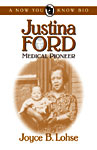
Joyce Lohse, author of the "Now You Know" Bios from Filter Press, is interviewed in a documentary about Dr. Justina Ford, Colorado's first female, African-American physician, on Colorado Experience on Rocky Mountain PBS airing Feb. 28 at  at 7 p.m. (Channel 6 in Denver.) Joyce, who is also WWW's hard-working administrator, says, "Yikes! My TV debut!!"

Sherry Johns has just released the first book from her new publishing company, Sherry Johns Publishing. Down Memory Lane with the Beaver Creek Folks was written by Della Goode Lancaster, who grew up on the fertile banks of Beaver Creek, on the eastern edge of Fremont County, Colorado in the late 1800s. From old Uncle Tommy Stuart, whose neighbors tenderly cared for him as he died, to young Bettie McCurry, who was the first to be buried in the Callen Cemetery, Della weaves a colorful tapestry of the close-knit families who came to Colorado, seeking a better life. She details her happy schooldays at the tiny rock-built Glendale School and the disastrous flood of 1921, as well as Christmas programs, pie suppers and a Literary Society. The front and back covers were designed by Della's great-grandson.

Marsha Ward's 2012 novel, Spinster's Folly, is a finalist for the Whitney Award in historical novels. Marsha says, "I must still be in a daze from receiving the news, because I haven't yet sent out news releases to local newspapers as I should have done. I was prompted to write an acceptance speech, just in case, and I had a few ideas, but life got crazier than before, and I haven't done that, either." The Whitney Awards will be announced May 11th in Provo, Utah.


Copyright free from Chicago State Univ.
CJ Fosdick is at work on a trilogy of historical romances and was inspired by John Gast's 1872 painting, "The Spirit of Manifest Destiny." Although the painting, completed for a series of western travel guides, looks large, writes CJ, the original, now in the Library of Congress, is less than 13 X 17 inches. "I fell in love with this painting, a visual encyclopedia of historical transportation technologies surging west during the 19th century," says CJ. "Sometimes a picture really is worth one thousand words! The spirit of manifest destiny--with all its bittersweet side-effects-- pervades some of the time period in my historical romance waiting to be discovered, The Calling Stone."